“Snapshot Saturday”
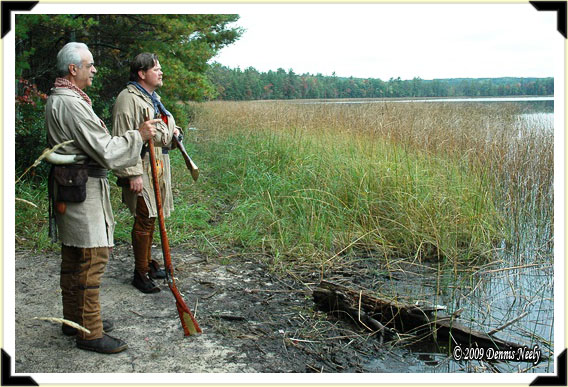
Jim Aude (left) and John Booy (right) gaze out over Marl Lake on a peaceful afternoon at the “Old Geezer Scout.” Old Northwest Territory, 1790.
Jim Aude (left) and John Booy (right) gaze out over Marl Lake on a peaceful afternoon at the “Old Geezer Scout.” Old Northwest Territory, 1790.
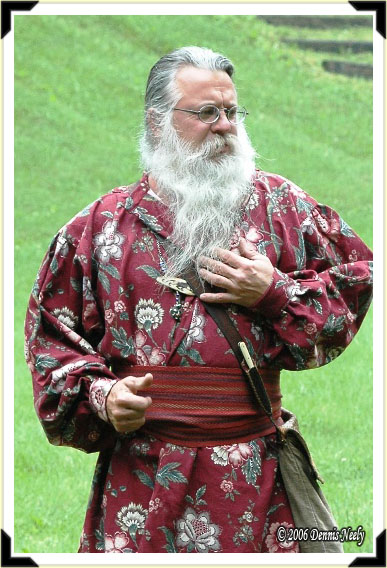
Roger Trammel bringing a smile to everyone’s face as he gave his personal testimony during Sunday morning church, behind the block house on the Primitive Range at Friendship. Roger was known for his quick wit, delightful stories and dedication to his family. He was a traditional black powder hunter, but most important, he was a good friend. Roger Trammel passed away March 11, 2014. Please include Roger and the wonderful family he left behind in your prayers…
Dawn broke with a clear sky. A quarter-inch of ice skimmed the surface of the prior day’s melt-off puddles. The overnight cold froze the rutted mud and left the calm air smelling clean and fresh, but not spring-like. A thin, white frost coated the brown, half-matted prairie grass, the apple tree’s buds and the red cedar trees’ burgundy-colored boughs. Anticipation filled our hearts.
The first drift looked like two bell-shaped mounds that sprawled over the wagon trail and spilled into the cut hayfield. The snow was dirty and dingy, speckled with smelt-shaped leaves and edged with dish-water-gray ice. A smattering of old deer tracks, melted into soft, almost indiscernible depressions, crisscrossed what remained of the once mighty drifts that stood eye-high to the east of the vine covered fence.
Around the bend, ice flowed across the road. Then down the hill, the tip of a yellow-sand wash filled the ruts where cascading water ran hard. At the next two rises, the crusty drifts were clearly too deep; our course veered right as the 4 by 4 passed over ankle-deep snow without leaving a mark. The usually soggy dip was frozen firm. In no time we made the gate, then turned north on dry prairie grass. Tami and I had looked forward to this drive for over two months.
Rough, gray ice covered the steep hill that leads to the grassy clearing west of the cedar grove. “That doesn’t look good,” Tami said. “Do you think we can make it back up?” she questioned as she glanced my way.
“We’ll see, won’t we,” I said.
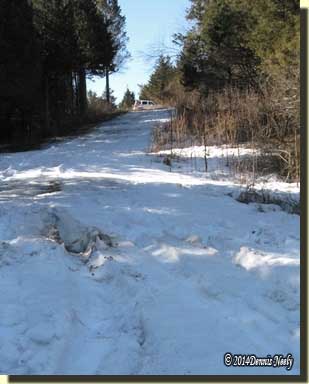
Only ruts remained after Scott’s John Deere tractor pulled the stuck truck free.
At the base of the hill, in the shadows of a tall stand of cedars, the snow seemed to follow the contour of the ground, and did not appear too deep. We made it down the hill, over the snow to the matted prairie grass and continued on our way. We were not so lucky on the return trip.
When we passed the first time, the snow beneath the tires broke up into round, slippery ice balls—the kind that act like greased ball bearings and afford no traction whatsoever. The truck’s momentum slowed. We made it halfway up the hill. I backed up and started a second run and that’s when the tires broke through. The snow on the crest of the rise was much deeper than I thought. The North-Forty claimed another victim…
Tami stayed with the warm truck, and I hiked out. The idea was to bring back Tami’s Jeep, pick her up and leave the truck in the woods until the snow melted some more—a couple of days, perhaps.
Like a kid with new boots in search of a worthy mud puddle, I took what Tam calls “the scenic route.” My course skirted the cedar grove, then cut across the wheat field that barely sprouted before the first, early freeze. I figured a guy might as well do some shed-antler hunting on the stroll home.
A third of the way across the field, I angled east to check a hillside and the trail that crossed it. I got thinking about the number of times the North-Forty has imperiled an iron horse or its many variations. I began to shake my head, more out of respect and awe for that plot of ground than in disgust.
Growing up, my dad often told how, in the early 1950s, one of the Holstein heifers broke through the fence and got mired in the sticky muck near the River Raisin’s bank. He and LeRoy, who worked the farm, hired Beal Trucking’s Caterpillar D4 dozer to pull the cow out, if I recall the story correctly. Well, the dozer went down, too. The custom-built winch on Beal’s big wrecker and a series of long cables saved the heifer and the D4, but not without a tremendous effort.
I can remember a number of times when LeRoy’s International “Super M” or his “560” got stuck, even with loaded tire, wheel weights and chains. In high school, when I really fell in love with the North-Forty, it seemed I was always getting some vehicle or tractor stuck—the white Chevy Corvair, especially. That car had no guts, but in hindsight, that is how I learned to respect the land.
In recent years, the power line subcontractors have taken the brunt of the North-Forty’s vengeance. A trimming crew lost a big Michigan loader outfitted with a Hydro-Ax mulching brush hog in the right of way that crosses the river. It took them two days of hard digging and winching to free the loader, but they were warned.
“This will take two days. We work in the UP,” the crew chief scoffed, “and we know all about wilderness.” When the crew left ten days later, the clear winner was the North-Forty.
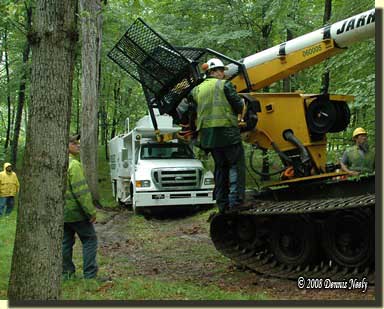
Even with 30-inch wide pads, the Jarraf track trimmer had a difficult time freeing a subcontractor’s mired boom truck.
A few years ago, a light morning shower turned the wagon trails greasy. That crew was warned to get on the high ground at the gate if it rained. They ignored the warning. A brand new boom truck came to rest firm against an unforgiving white oak tree. Instead of listening, that crew chief tried to force his will on the forest. Ten men, two track vehicles and three 4 by 4s later, the truck was free, but the road was deeply scarred.
On another occasion, the power company’s repair foreman called. A frayed cable needed immediate attention, he said. The weather was mild, but a heavy freeze and a wet snow loomed in the forecast for later that week. The foreman ignored my warning to get in and out before the snow. “We have it scheduled,” he said. “A little snow isn’t a problem for us.” That emergency cable repair claimed a 6 by 6 boom truck and two 4 by 4 pickups. It took two days to get them out.
When I reached the road, Scott was driving by in his John Deere 6140—a four-wheel drive, 145-horsepower tractor—hauling a load of round hay bales. We waved at each other, and by the time I reached the back door, I gave in and called his cellphone. He said he wondered if I had gotten stuck and almost called me. After he unhooked the trailer, he came back to pull the truck free. We took our time, respected the land and soon the pickup was safe on high ground.
On a number of occasions I have been taken to task for referring to the North-Forty as a “wilderness.” Most often, somewhere near the beginning of the chastisement, the critic cites a loose interpretation of the definition of wilderness as put forth in “The Wilderness Act of 1964:”
“A wilderness, in contrast with those areas where man and his own works dominated the landscape, is hereby recognized as an area where the earth and its community of life are untrammeled by man, where man himself is a visitor who does not remain.” (The Wilderness Act of 1964, Public Law 88-577 (16 U.S.C. 1131-1136), Sec. 2, (c))
In my experience, there is no winning in such an argument. But traditional black powder hunting is not about winning or losing, rather, it centers on reliving the past through simulating the historical circumstances of a chosen time period. In some respects, Joseph Doddridge suggests a plausible solution to guide living historians on this noble adventure when he suggests:
“Let the imagination of the reader pursue the track of the adventurer into this solitary wilderness…” (Doddridge, 22).
Now, if you have seen Mark Baker’s videos, “The Long Hunter Series,” you will no doubt recognize the rest of that quotation: “…Bending his course towards the setting sun, over undulating hills, under the shade of large forest trees…”
But getting back to defining “wilderness” from the traditional hunter’s perspective, it is the mind, one’s imagination as Doddridge puts it, that controls the suspension of reality and allows our version of time travel to exist. And further, it is the mind that determines what constitutes a close approximation of the living historian’s simulated environment to that of a hunter hero’s surroundings of long ago.
With modest care, a traditional hunter can choose a spot, take a seat, look about and never see one shred of evidence that ties that location to a specific point in time or location—not in the 21st century nor in the 18th century, for that matter. And most times, a short while after arriving, the glade returns to an unfettered state, a state where the presence of man is absent, save for the observer, and “the earth and its community of life are untrammeled…”
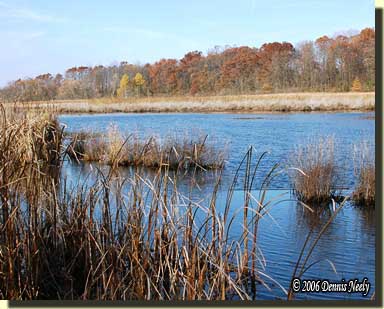 And if the circumstance parallels that described in an old woodsman’s forgotten words, is this not an 18th-century wilderness? Can a living historian not accomplish the same purpose on a humble plot of twenty acres? Or ten? Or maybe as little as five?
My contention is, and always has been that the stage upon which my 18th-century adventures play out are “wild,” and thus, “wilderness.” The North-Forty eats D4 Caterpillars, International 560 tractors, and 6-by-6 power-company boom trucks without so much as a belch or a stifled burp. Miring a “rugged Dodge Ram 4-by-4 pickup,” as the flashy commercials tout, is child’s play.
By the same token, this plot of land panics an unwary woodsman with thigh-deep quicksand or threatens hypothermia with an unexpected plunge into frigid, murky water. Unseen tangles and snares slam an interloper face down in oozing spring mud, raspberry switches cut and slash bare skin, and if a traditional woodsman dares misplace a buffalo-hide moccasin on a crisp snowy morn, the inevitable tumble and roll leaves a lasting wilderness lesson.
From the traditional hunter’s perspective, all such happenstances are unforgettable, historically correct mementos of journeys taken on the addictive quest to answer a single haunting question: “What was it really like to hunt, survive and live in the Old Northwest Territory?” Delving deeper, one unearths the unmistakable reality that the land can and does inflict indiscriminate hardship, pain and sometimes death on all the tenants of the forest, including a humble, 18th-century, wannabe woodsman. That has not changed over the ages, and it will not. Wilderness is in the eye of the beholder.
In hindsight, I find it interesting that the critics are often the same folks who embrace busing salmon, contraceptives for troublesome deer and inventorying spotted owls. In a twist of irony, when these well-meaning folks reached the outer limits of the habitat and discovered the spotted owls cross-breeding with barred owls, they did not change their opinions, instead they took credit and named the “newly discovered” hybrid species: “sparred owls.” But that doesn’t count as trammeling on the wilderness, now, does it? Or is it really wilderness?
Venture into your personal wilderness, be safe and may God bless you.
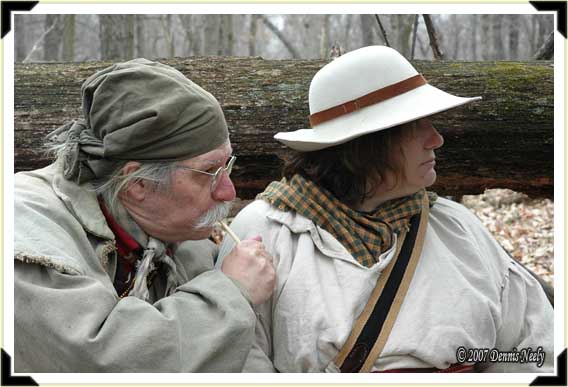
“A cluck on a single wing-bone call brought an immediate response from a gobbler in the bottomlands of the River Raisin. Old Northwest Territory, 1790s.
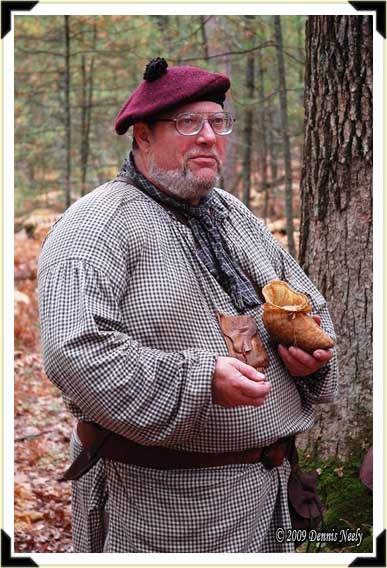
Charles Brown nibbled on parched corn as he watched the eastern trail for signs of returning hunters. “Old Geezer Scout,” Marl Lake, Old Northwest Territory, 1790.
“Snow pelts my face,” the brass lead holder scribbled on the folded journal page. “Now and again, icy flakes sneak behind my spectacles and sting my eyes. I pulled the wool blanket’s folds up around my cheeks. In front of me, a dead white ash leans south against a pitiful specimen of a wild cherry. Half of the ash’s branches are gone, the rest hang from the trunk’s underside.
“Trees pop in the wind from the cold. Ahead, at the edge where the River Raisin’s bottomland meets the swaying canary and Indian reed grasses, a tree groans with great regularity. Tis a mourning wind, a wind that bodes all creatures to bed tight, to wait in heavy cover, to conserve their energy. But this lowly woodsman is out, hungry from a lack of fresh venison, discouraged with the early winter and yes, struggling a bit.”
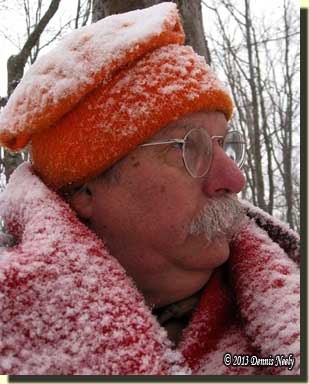 I slipped the brass lead holder and folded paper into the buckskin envelope, wrapped the thong around the envelope and tucked it in the top of my right leggin. I buried my fingers in the blanket’s folds in hopes of warming them enough to continue writing. I sat cross-legged in a nest cleared in the snow, in a hollow spot between two maple roots. The snow squall grew stronger. Only my eyes moved from side to side as I watched the last trail in the bottoms, the one devoid of white-tailed deer. Twenty or so minutes later the scribbling resumed.
“A strange compulsion drives me. I wandered beyond the second island, deep into the Raisin’s tangled abyss. I ventured out for a taste of the hardship of 1796, for the gratification of knowing that I can survive in the desolation that is December along the River Raisin, and to practice the old ways.
“A feeling of kinship just washed over my soul, a kinship with my hunter heroes, with John Tanner, Jonathan Alder and James Smith. For here I sit, deep in the Old Northwest Territory, wrapped in a single, four-point trade blanket, peering out from within the folds pulled close around my neck and cheeks, staring at the world of long ago, basking in its magnificent splendor. By choice, I am accepting the price of wilderness living. It is not an easy task, but it was everyday life for them, a life that proved harsh and brutal, sometimes fatal. This is the essence of what I so dearly crave, to answer that haunting question: “What was it really like…?”
Woven in the midst of conversations among traditional black powder hunters or living historians of late, seems to be the standard response: “struggling a bit,” or a variation thereof. This past weekend at the Kalamazoo Living History Show®, many conversations touched on life’s constant pulling and relentless tugging, on uncompromising schedules and on the resulting lack of available time to devote to this glorious pastime.
With winter still hanging on, at least here in Michigan, many traditional woodsmen are looking forward to the spring turkey season, while those who are strictly living historians share the same anticipation for the first warm-weather re-enactment of the year. It is, after all, normal for all of us to be looking forward, especially when afflicted with a severe case of cabin fever.
Whether we realize it or not, struggles are an inherent element of wandering down the path to yesteryear. They are always there, rearing up in varying degrees of urgency, and sometimes, at the most inopportune times. On other occasions, traditional hunters take them in stride without a second thought. I suspect the difference is the stress level in our daily, 21st-century lives.
For myself, I find I am behind on outfitting my new persona, that of a returned native captive who just can’t fit in with settlement life. A cut-out shot pouch, fashioned in the Odawa style, has been sitting on the corner of my workbench since last fall’s waterfowl season. A split pouch still needs dyed deer hair added to the dangling tin cones.
Pieces for a coarse-linen outer shirt are neatly folded on the corner of the bed in the guest room, and have been since before Christmas. And at Kalamazoo, I bought hand-dyed silk ribbon to bind the edges of the breechclout I have been using for almost a year, plus some more to finish off the flaps on a pair of blue wool leggins that are lurking somewhere in a folded yard of fabric.
Like others, my frustration level is running high, fueled by guilt spawned from simply not having enough spare time to devote to the hobby right now. And there is no doubt in my mind that not making it into the woods since early January is at the root of my displeasure. Life—and winter—gets in the way, as we all say.
I have been here before, and with the good Lord willing, I will be here again. The key to dealing with such frustrations for traditional woodsmen is to step back, take a deep, cleansing breath and count the steps forward on the path—to seek enjoyment from the little victories and successes. They are many, and often they go unnoticed, slipping by like a raspberry switch brushing against a buckskin leggin.
As if an answer to a prayer, this morning I happened upon the journal page written last December. I have referenced that tranquil snow squall many times, because for me that simple pursuit represents the final exam for last season’s traditional hunts. A number of struggles that surrounded my new persona found solution in those four solitary hours of suffering.
 Indeed, there is more to tell, more revelations to share, but for now my focus is on the scribblings of the second page. I have felt the kinship with long forgotten souls before, pristine moments, as I call them, but never as the new historical me. This was a first for the woodsman that grew up among the Ojibwe. There was no mysticism or magic involved, rather, a nurtured mindset allowed a cold and weary time traveler to return to the River Raisin that once was.
And is this not what we all seek? Are we not accepting the price of wilderness living, no matter how dear? Are we not taking the harder road, a road that we believe was once traveled by our own personal hunter heroes? Is this not the essence of the life we so dearly crave?
Step back, take a deep, cleansing breath and count the steps forward on the path…be safe, and may God bless you.
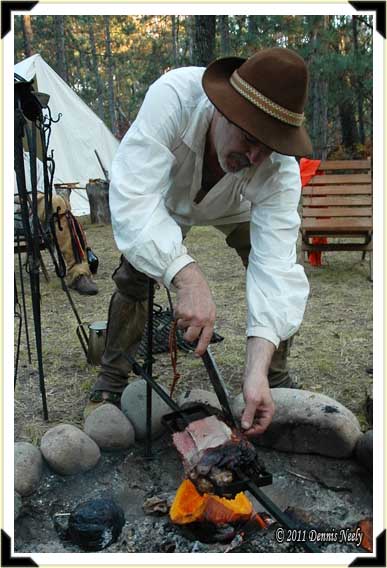
David Mercieca cuts another slice from a venison haunch, roasted over an open fire. “Swamp Hollow,” Old Northwest Territory, 1790.
Snow globs slid from bobbing cedar boughs. Blue jays perched on the topmost branches of a forked shagbark hickory tree, but remained silent. The air smelled damp and heavy, due to a warm west breeze that melted the packed, shin-deep snow. The hairs on the back of my neck twitched and tingled beneath a sweat-stained, checked neck scarf as my wool-lined winter moccasins still-hunted through Fred’s woods.
The steep trail crested beyond the shagbark hickory. The still-hunt paused at a young oak, then at another hickory tree. In the meadow to the south, a button buck’s head popped up. The deer looked north, sniffed the air, then took two steps to the east. A young doe followed, exhibiting a similar caution. In a few minutes their mother stepped over the small knoll in the meadow’s center.
As I peered around the hickory trunk, my head was below their hooves. A bland, gray evening sky backlit the whitetails. The button buck nuzzled the ground, but with the snow cover, he found no food and kept moving to the east. The young doe and its dam walked lightly, testing the air with great regularity. Before those three made it to the west edge of Fred’s woods, another trio appeared, then a pair.
Dark brown eyes gazed in the direction of the tall hickory, but none detected the deadly shape that lurked behind that tree. The gentle wind was at their rumps, and they felt safe in the open, well within the reach of Old Turkey Feathers. They did not comprehend the danger, and I did not seek an antlerless deer, so perhaps there was nothing to comprehend.
When all heads were down, I bent forward and backed downhill until the deer in the meadow disappeared from my sight. The roll of the hill now protected my movement as I stalked into a stand of old red cedar trees. Shuffling moccasins struck a churned up trail that cleaved the snowbanks.
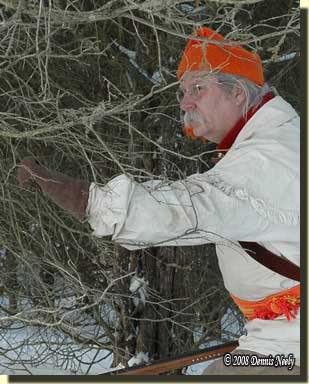 At the downed cedar tree that yielded a fine gobbler several springs before, I eased uphill once again, using a broad cedar to mask my movements. I saw two more does enter the meadow, following the path of the other whitetails. I stepped back and pressed on to the west, dipping down in the mouth of deep ravine. My moccasins slipped up the other side, forcing me to plunge my left hand into the snow to keep my balance.
Legs milled about in the cedars on the west edge of the meadow. I spotted two deer ahead and knew I could advance no farther. A wild apple tree with all its main limbs broken and tented to the ground offered the best concealment. In my youth this tree was a favorite, offering succulent fruit in late summer. For a brief instant I mourned the apple’s passing, then I knelt and brushed away as much snow as I could from behind one of the branches. I eased the bedroll into the nest and sat for only a few seconds before a mature doe appeared to the west, not thirty-five paces distant.
Not long after, four more does entered the meadow, then a spiked buck. As darkness fell, bodies moved in the cedars, downhill and behind my lair. One of the bigger deer sported eight points, but hung back, preferring to remain in the growing shadows. Patience is a virtue, but not when night’s black abyss charges forth. I raised Old Turkey Feathers. The sear clicked into the tumbler as the tarnished brass buttplate settled against my shoulder. The race was on between nightfall and a chance at a fine buck…
One of the very first journals that I read was Voyages and Travels of an Indian Interpreter and Trader by J. Long. The journal was given to me, and the date “1791” printed in large numerals at the bottom of the cream-colored cover caught my eye immediately. I think I said something like, “Wow! Right in my time period!”
I devoured Long’s journal. I highlighted passages in yellow, underlined pertinent sentences in red and scribbled notes in the margins, especially the entries that related 18th-century hunting stories. Long described the making of a sweat lodge, the meanings woven into wampum belts and making fish hooks from the thigh bones of a hare. He told of an Indian shortening his trade gun with a file so it could be concealed under his blanket, drugging wine with “laudanum” (which the local pharmacist could not identify), and included a basic translation of English words into the Iroquois, “Algonkin” and “Chippeway” languages.
As an aside, I find his “Chippeway” vocabulary interesting, because I have been taking a series of online Ojibwe webinars in hopes of gaining a rudimentary understanding of this complicated language for my new persona. After one of the lessons, I felt compelled to rummage through some of the old journals that include a Chippewa or Ojibwe dictionary. I spent time in the “Vocabulary” section at the end of Long’s journal (Long, 183). Most of the words are misspelled by today’s standards; dialect and location might be partly to blame. But when sounded out as Long wrote them, many of the translations are close to the proper pronunciation.
As I thumbed through Long’s Chippeway dictionary, I found myself drawn back to his journal. I hadn’t opened this book in a number of years, by choice. Up until the dawn of the 21st century, I relied upon this for some of my primary documentation, as I do with many other 18th-century journals. Up until that time, I even quoted Long in a number of published articles.
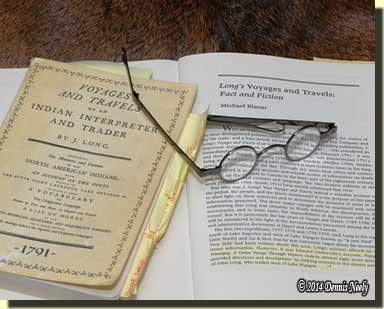 In the late 1990s or early in the 2000s, I picked up a copy of The Fur Trade Revisited: Selected Papers of the Sixth North American Fur Trade Conference, Mackinac Island, Michigan, 1991 from a publisher’s clearance table at the Borders bookstore in Ann Arbor. The book is quite thick and it took me a while to get through some of the papers. I didn’t read them all.
But imagine my surprise and utter disappointment when I ran across Michael Blanar’s paper, “Long’s Voyages and Travels: Fact and Fiction,” which debunked Long’s missive, complete with passages borrowed from other, documented, traders of that era (Brown, 447):
“Throughout these journeys Long described himself as a ‘trader’; however, his name appeared nowhere on the list of those granted trade licenses for the areas mentioned in these three expeditions…” (Ibid, 451)
“Among the available records Long’s name appeared only once, on licence [sic] #19 dated 21 May 1786 to Detroit—a destination he never mentioned—for the 1786-1787 season, at a time, which will be shown later, he was otherwise occupied. This licence [sic] permitted him to take two bateaux and eight men to Detroit and there to trade 100 gallons of rum, 32 ‘fusils,’ 1000 pounds of powder, and 10 hundredweight of ‘shott.’” (Ibid, 452)
Blanar’s paper unravels Long’s journal further, including passages that appear to be plagiarized from previously published authors. Needless to say, I was devastated. I tucked Long’s journal away in a dark corner of my bookshelves and hadn’t pulled it out until I got the urge to chase down Ojibwe dictionary’s from the past.
As traditional black powder hunters, we sometimes lose sight of the fact that we are also living historians, as well. Not long ago, in a serious living history discussion with another traditional hunter, I made the statement that, given a choice, I would prefer to slip into the forest over attending a quality re-enactment or staying home to sew a new pair of leggins. As proof of that last statement, the leggins are not cut out after a year of trying—much to my discredit, I am content to use the old buckskin leggins.
But we are all living historians, and as much as we enjoy the simple pursuit of game in a bygone era, we have an obligation to question the primary sources we love to quote. We do not need to take on the role of an investigative reporter, we simply need to be conscious of discrepancies and be a little more aware of who our hunter heroes really were.
Slip into the forest of long ago, be safe and may God bless you.